The monsoon season brings cool weather, fresh air, and much-needed rain across India. While it offers relief from the summer heat, it also creates several challenges inside our homes. Damp walls, mold growth, peeling paint, swollen wooden furniture, bad odors, and water leakage are common problems that many homeowners face every year.
The good news is that most of these issues can be prevented with proper planning and regular maintenance.
In this guide, we’ll explain simple and practical monsoon interior care tips that every homeowner can follow. Whether you live in an apartment, independent house, or villa, these tips will help keep your home healthy, beautiful, and long-lasting.
Why Is Monsoon Hard on Home Interiors?
The monsoon season brings cool weather, fresh air, and much-needed rain across India. While it offers relief from the summer heat, it also creates several challenges inside our homes. Damp walls, mold growth, peeling paint, swollen wooden furniture, bad odors, and water leakage are common problems that many homeowners face every year.
The good news is that most of these issues can be prevented with proper planning and regular maintenance.
In this guide, we’ll explain simple and practical monsoon interior care tips that every homeowner can follow. Whether you live in an apartment, independent house, or villa, these tips will help keep your home healthy, beautiful, and long-lasting.
1. Check Your Walls for Dampness

Walls are usually the first place where moisture appears.
Signs of Damp Walls:
- Dark Patches
- Bubbling or peeling paint
- White powder deposits (efflorescence)
- Wet surface even after drying
- Paint discoloration
Ignoring these signs can lead to expensive repairs later.
What You Should Do:
- Keep furniture a few inches away from damp walls to improve airflow.
- Repair wall cracks before the rainy season.
- Use quality damp-proof coatings where moisture is a recurring issue.
- Fix external wall leakage immediately.
2. Prevent Mold and Fungus Growth

Mold grows quickly in humid environments.
Besides damaging walls and furniture, mold can also affect indoor air quality and may trigger allergies in sensitive people.
Common Areas Where Mold Appears:
- Bathroom ceilings
- Kitchen corners
- Wardrobes
- Behind beds
- Window frames
- Store rooms
Easy Prevention Tips:
- Open windows whenever weather permits
- Use exhaust fans in kitchens and bathrooms
- Keep wardrobes dry
- Clean damp surfaces immediately
- Avoid storing wet clothes indoors
Good ventilation is one of the best defenses against mold.
3. Protect Wooden Furniture

Wood naturally absorbs moisture from the air.
During the monsoon, this can cause:
- Swelling
- Warping
- Loose joints
- Surface damage
Furniture Care Tips:
- Avoid placing furniture directly against exterior walls
- Wipe furniture regularly with a dry microfiber cloth
- Use furniture polish recommended by the manufacturer
- Keep wooden cabinets well ventilated
- Use moisture absorbers inside wardrobes
Engineered wood also needs protection from continuous moisture exposure
4. Choose Moisture-Resistant Interior Materials

If you’re renovating your home before the monsoon, choosing the right materials can reduce future maintenance.
Better Choices Include:
- Moisture-resistant laminates
- Marine-grade plywood for kitchens and bathrooms
- PVC or WPC cabinets in wet areas
- Quartz countertops instead of porous natural stones
- High-quality waterproof adhesives
Quality materials may cost more initially but usually last longer and reduce repair costs.
5. Inspect Windows and Doors

Rainwater often enters through small gaps around windows and doors.
Check For:
- Damaged rubber beading
- Loose window frames
- Broken sealant
- Water entering during heavy rain
Replacing worn-out sealants before the monsoon can prevent significant interior damage.
6. Maintain Your Ceiling

Ceiling leakage often starts with a tiny crack.
Watch for:
- Yellow stains
- Damp ceiling patches
- Paint bubbles
- False ceiling discoloration
If you notice these signs, inspect the roof or upper floor immediately instead of simply repainting the ceiling.
7. Keep Your Kitchen Dry

The kitchen already produces heat and steam throughout the year. During monsoon, humidity increases even further.
Kitchen Care Tips:
- Run the chimney while cooking
- Use an exhaust fan daily
- Dry the sink area after use
- Check under the sink for hidden leakage
- Store groceries in airtight containers
A dry kitchen stays cleaner and reduces pest problems.
8. Bathroom Maintenance During Monsoon

Bathrooms remain wet for long periods in the rainy season.
Important Steps:
- Clean tile joints regularly
- Repair leaking taps
- Keep the exhaust fan running after showers
- Use anti-skid floor mats
- Prevent water from collecting in corners
Good bathroom maintenance also prevents unpleasant odors.
9. Care for Wardrobes and Storage

Closed storage spaces trap humidity.
This often causes:
- Musty smell
- Mold on clothes
- Fungus on leather items
Simple Solutions:
- Keep wardrobe doors open occasionally
- Use silica gel or moisture absorbers
- Avoid storing damp clothes
- Clean shelves regularly.
Fresh air circulation keeps storage spaces healthier.
10. Protect Electrical Systems

Water and electricity are a dangerous combination.
During monsoon:
- Check exposed wiring
- Repair loose switchboards
- Avoid overloaded extension boards
- Keep electrical appliances away from damp walls.
If water leakage reaches electrical points, contact a qualified electrician immediately.
11. Improve Indoor Air Quality

Fresh indoor air makes your home more comfortable.
Easy Ways
- Allow sunlight inside whenever possible
- Use indoor plants suitable for low humidity management
- Keep rooms clutter-free
- Vacuum carpets regularly
- Clean air conditioner filters.
A clean environment also reduces dust and allergens.
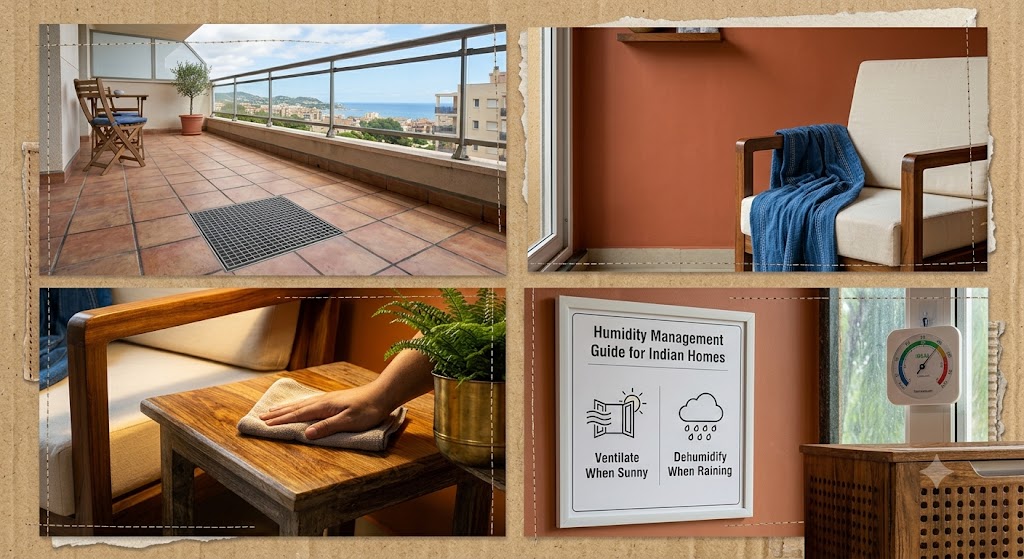
12. Balcony and Outdoor Areas

Balconies are exposed to constant rain.
Regularly inspect:
- Floor drainage
- Waterproofing
- Tile joints
- Balcony railings
- Outdoor furniture
Standing water should never remain for long periods.
Monsoon Home Maintenance Checklist
Use this checklist before and during the rainy season:
1. Inspect walls for dampness
2. Repair cracks
3. Check roof leakage
4. Clean drainage pipes
5. Seal windows
6. Service exhaust fans
7. Protect wooden furniture
8. Keep wardrobes dry
9. Inspect plumbing
10. Check electrical fittings
11. Improve ventilation
12. Clean mold immediately
Following this checklist can prevent many expensive repairs.
Common Mistakes Homeowners Make
Many people unknowingly increase monsoon damage by making simple mistakes.
Avoid these habits:
- Ignoring small wall dampness.
- Pushing furniture directly against damp walls.
- Using ordinary MDF in moisture-prone areas.
- Leaving laminate edges exposed.
- Closing rooms completely for long periods.
- Ignoring balcony and terrace drainage.
- Painting over dampness without fixing the source.
- Using cheap adhesives and poor installation.
Monsoon protection isn’t about using the most expensive material. It’s about choosing the RIGHT material for the RIGHT location and installing it correctly.
Save this post before starting your next interior project. 🌧️🏠